

Element: Ether (Akasha) — Space, Boundaries, and the Forces That Shape Everything
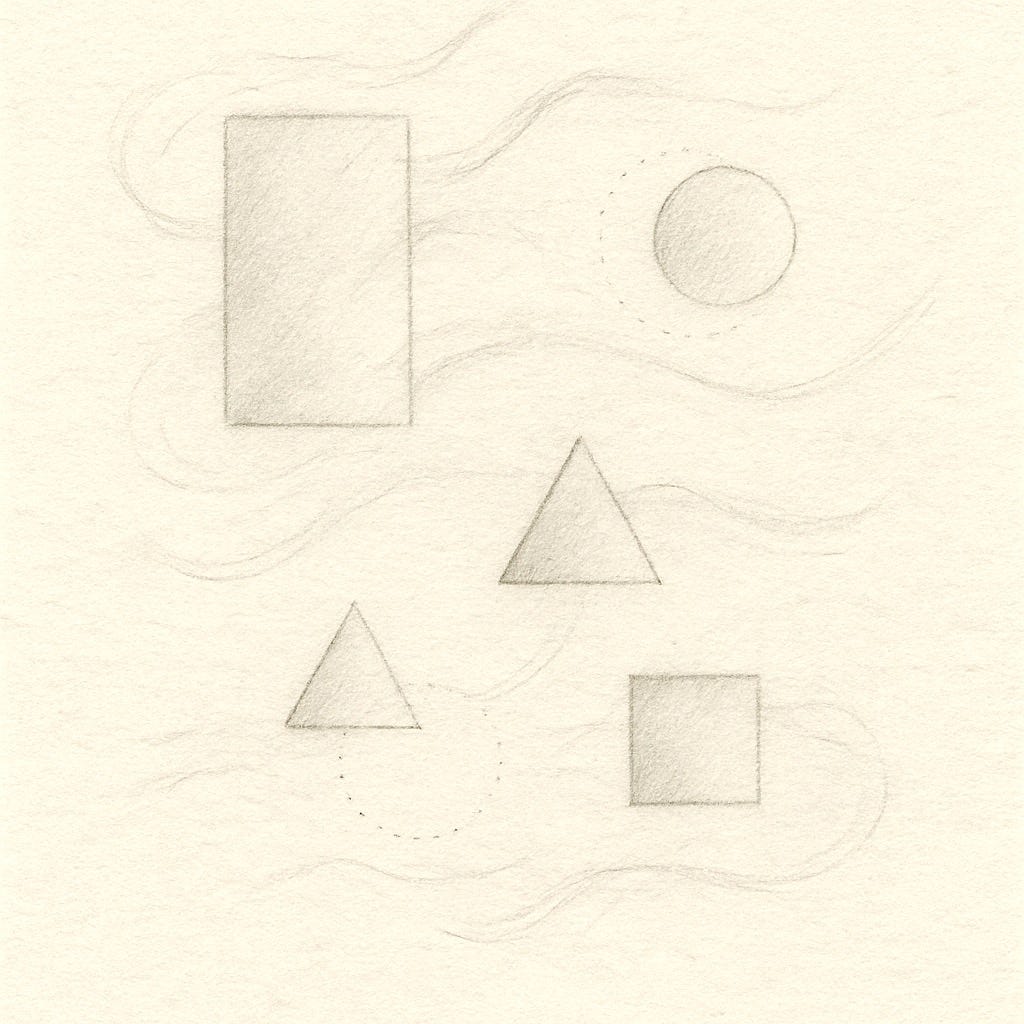
“Architecture is shaped by the space you protect, not the diagrams you draw.”
The Space That Decides Everything
Most architectural failures do not begin in code.
They begin earlier.
They begin when there is no space to pause.
No space to discover.
No space to clarify ownership.
No space to align intent.
Deadlines compress thinking.
Urgency replaces design.
Silence is mistaken for agreement.
When that space collapses, architecture does not disappear.
It quietly forms under pressure, shaped by urgency, hierarchy, and organisational gravity.
This invisible layer is Ether.
And once Ether is constrained, every downstream decision becomes harder to reverse.
Story 1 - When There Was No Space to Discover
In a major partner integration, we moved fast.
Too fast.
There was little time for discovery.
No real pause to understand customer journeys, SLAs, or failure modes.
No space to separate business intent from data movement.
As a result, the integration design collapsed into the most immediate option.
There was no abstraction of the data model.
Business logic and data transfer blurred together.
And critically, the integration was forced to be synchronous.
On paper, it worked.
In reality, it should never have been synchronous.
Latency leaked directly into the customer experience.
Partner instability became our instability.
Failures cascaded instead of being absorbed.
This was not a technology mistake.
It was an Ether failure.
Without space to discover, decisions become urgent instead of intentional.
Synchronous coupling becomes the default, not the design.
Architecture formed in the absence of breathing room.
Story 2 - When Ownership Was Unclear, Logic Drifted
In another programme, an unresolved question lingered.
Should certain business rules live in the front end or in the core domain?
The discussion dragged on.
Delivery pressure increased.
No clear ownership emerged.
Eventually, logic flowed to the nearest place that could move fastest.
The front end.
At first, it felt like progress.
Changes shipped quickly.
Teams stayed unblocked.
Then the cost appeared.
Business logic duplicated across channels.
Inconsistencies crept in.
Simple changes required coordination across multiple teams.
Time to market slowed with every release.
The problem was not front end capability.
It was the absence of ownership clarity.
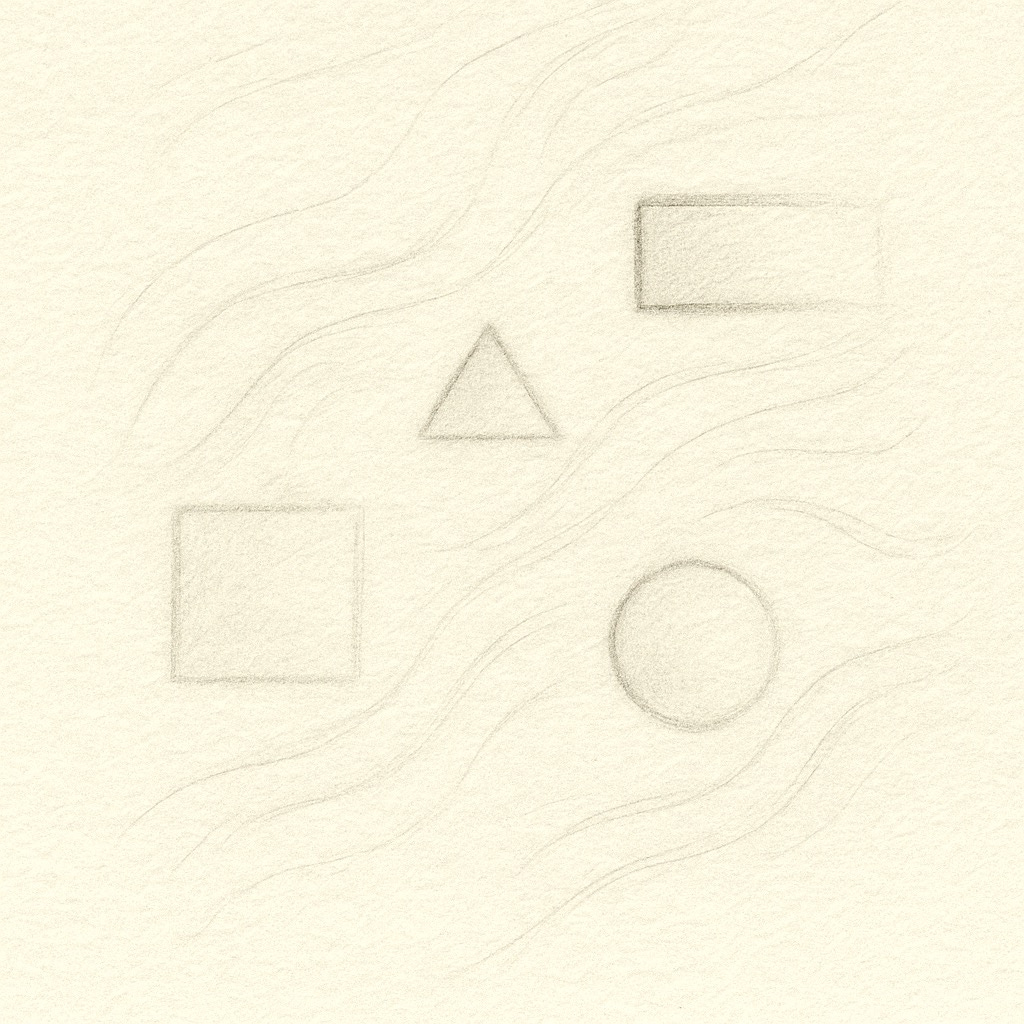
When ownership is unclear, logic does not wait.
It migrates toward proximity and power.
Architecture follows organisational shape, not architectural intent.
This is Ether at work.
Story 3 - When Organisational Gravity Bent the Design
In a large scale programme, a new platform with multiple domains was introduced.
Its integration with existing systems looked straightforward in principle.
In practice, those existing systems were tightly coupled to their own data models.
Their teams had different priorities.
Their capacity to evolve was limited.
The aspiration was clean abstraction between platforms.
The reality was compromise.
Instead of reshaping boundaries, layers of data translation were added.
Some were brittle.
Some were flawed.
All increased long term complexity.
This was not a terrible decision.
It was a constrained one.
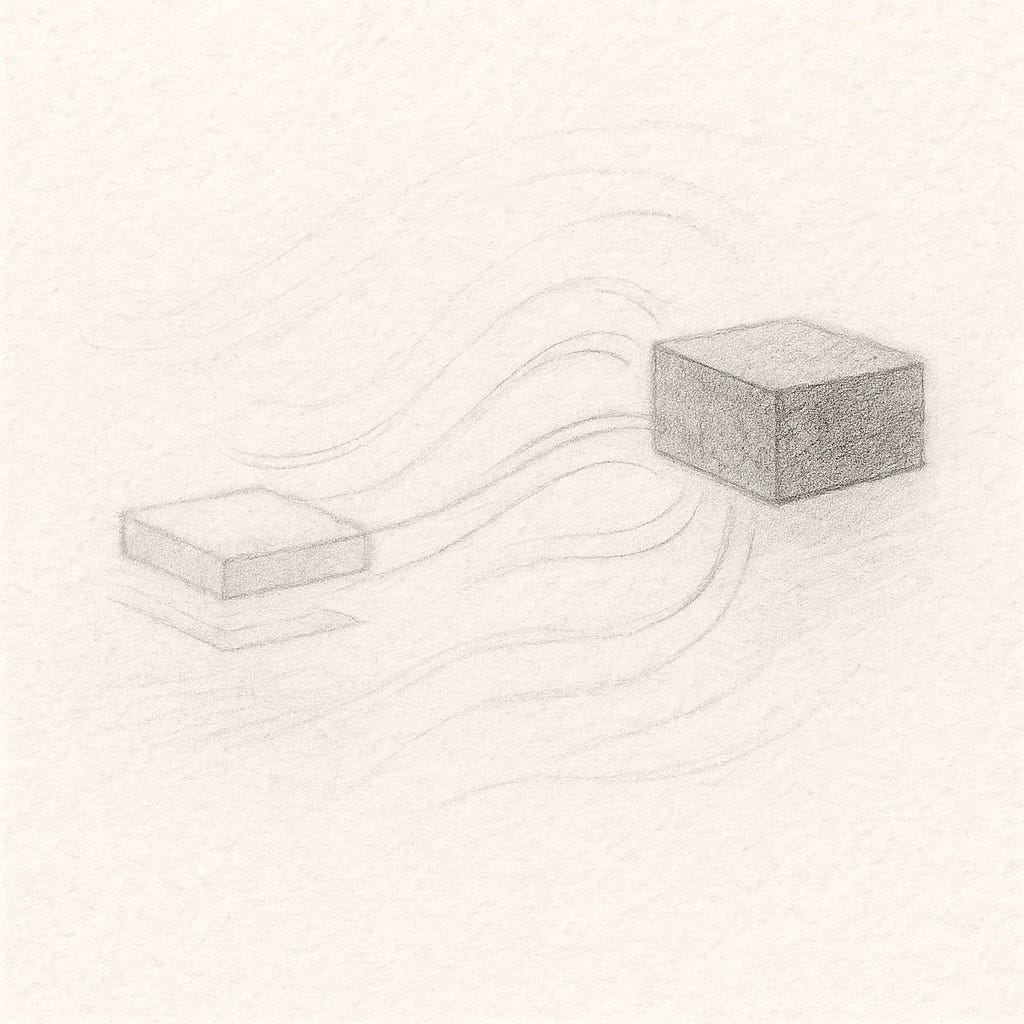
When organisations lack the space to change, architecture adapts by adding layers.
Translation becomes the substitute for transformation.
Ether does not block architecture.
It bends it.
The Architecture of Ether
Across all three stories, the pattern is consistent.
No discovery space led to premature coupling
No ownership clarity led to logic drifting to the edges
No organisational capacity led to translation layers replacing abstraction
None of these were visible on diagrams.
None were caused by poor engineering skill.
They were shaped by invisible forces.
Ether is the container within which architecture emerges.
It includes:
time to think
clarity of ownership
organisational capability
decision latency
team topology
leadership willingness to protect space
This is where leadership matters most.
Leaders shape Ether by what they rush, what they protect, and what they allow to collapse under pressure.
When Ether is constrained, architecture becomes reactive.
When Ether is spacious, architecture becomes intentional.
✨ Summary: What Ether Teaches Us
Architecture forms even when you do not design it
Space is an architectural input
Ownership clarity shapes system boundaries
Organisational gravity bends even the best designs
Leadership either creates space or collapses it
What you cannot draw often matters most
✨ Sutra
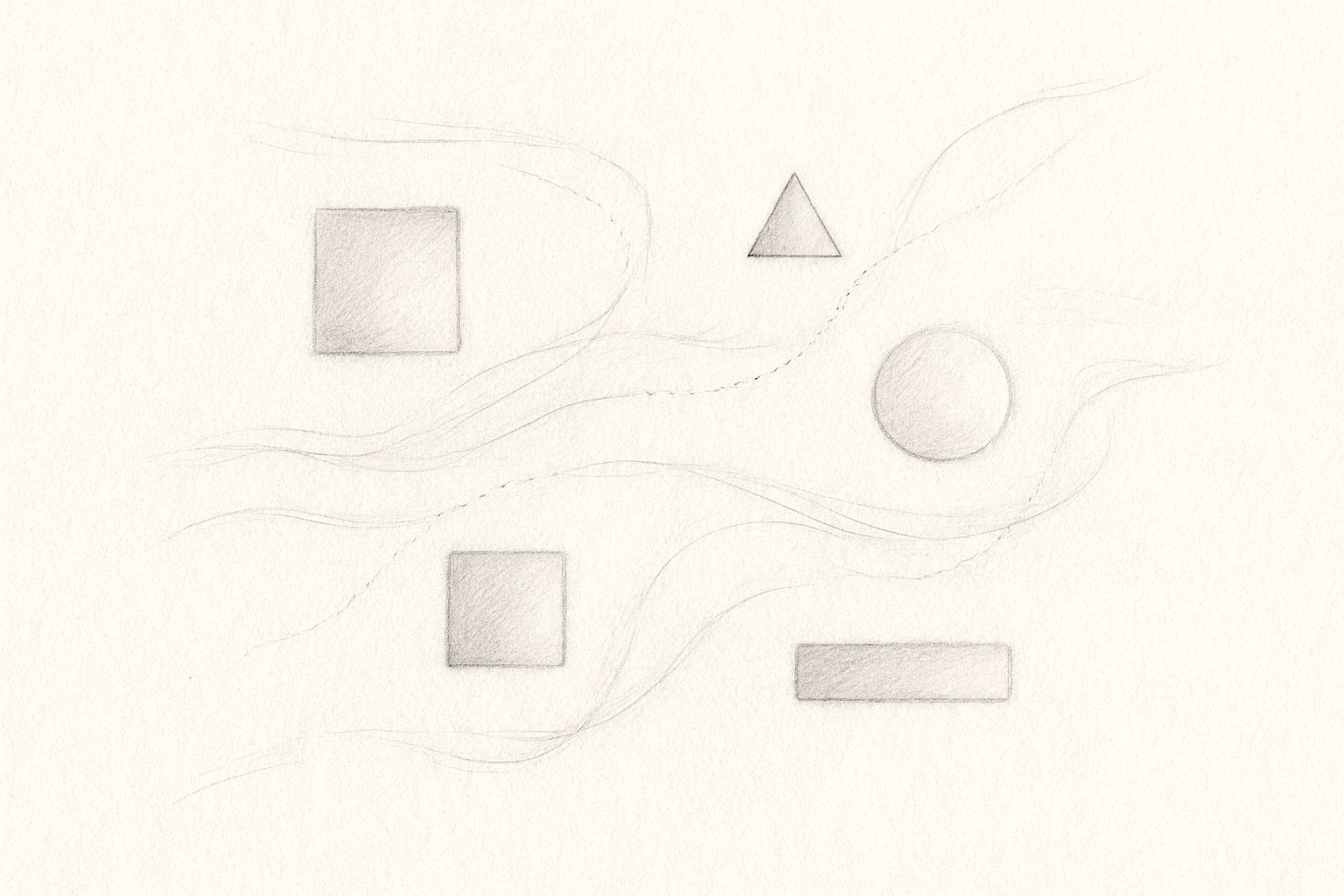
Architecture is shaped by the space you protect, not the diagrams you draw.
Reflection
Where in your organisation is there no space to pause and think?
Which architectural decisions are being made early simply because there is no room to delay them?
And the uncomfortable one:
Where have you accepted architectural compromise not because it was right, but because there was no space to do better?
These are not technical questions.
They are architectural responsibilities.