

Element: Air (Vayu) - Clarity, Context, Direction, Lightness

The Mist is What Breaks the System
Most systems do not fail from pressure.
Most fail from misunderstanding.
It is not the load that suffocates them.
It is the lack of Air.
Air is context.
Air is meaning.
Air is the clarity that makes everything lighter.
Without it, systems grow heavy with confusion, drift, and accidental coupling.
The fires of last week revealed truth under heat.
The Air of this week reveals truth through clarity.
This is the Sutra of systems that breathe.
🌬️Story 1: The Partner Integration That Finally Breathed When Context Moved
It looked simple on paper.
Our integration partner had their own customer categorisation and asked us to store it as a flag.
A single field.
Easy replication.
No complication.
Except the moment we built it, everything became complicated.
Flags drifted between systems.
Updates arrived late.
Teams raised tickets because values did not reconcile.
Meetings turned into debates about what the flag “meant”.
The architecture felt heavier than the requirement.
We were moving data, but not meaning.
Then the breakthrough arrived.
During a workshop, someone from the partner team mentioned, almost casually:
“These categories influence how customers behave in certain scenarios and ultimately eligible for certain benefits”
That one sentence was the first breath of Air.
Suddenly the real integration emerged.
We did not need to replicate the categorisation.
We needed to derive behavioural attributes and benefits from it.
And when the partner changed their category, we simply re-derived the behaviour and benefits.
No sync battles.
No drift.
No fragility.
Clean boundaries.
Light architecture.
The moment Air moved, everything made sense.
Air carries intention, not replication.
Systems breathe when meaning flows.
🌬️Story 2: The Flag That Created Coupling Instead of Clarity
It happens everywhere.
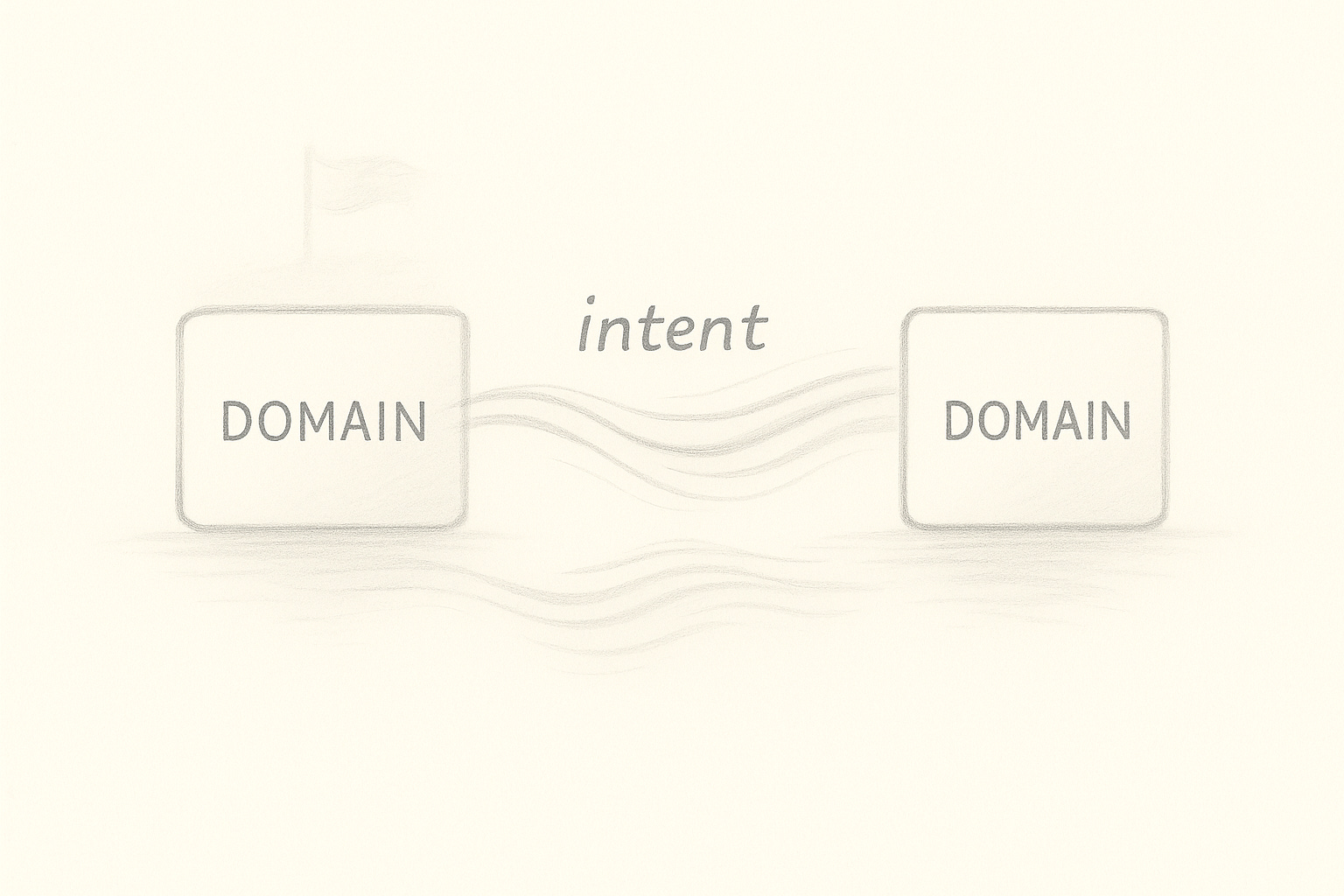
One domain tries to help another by passing a flag.
“Set this field. It will be easier for you.”
Except it never is.
In one case, a team introduced a flag:
“specialHandling = true”.
Helpful in theory.
Painful in practice.
No one knew what “special” meant.
Operations guessed.
Developers guessed.
Downstream systems inferred meaning from usage patterns.
The fog got thicker with every release.
The receiving domain did not want the flag.
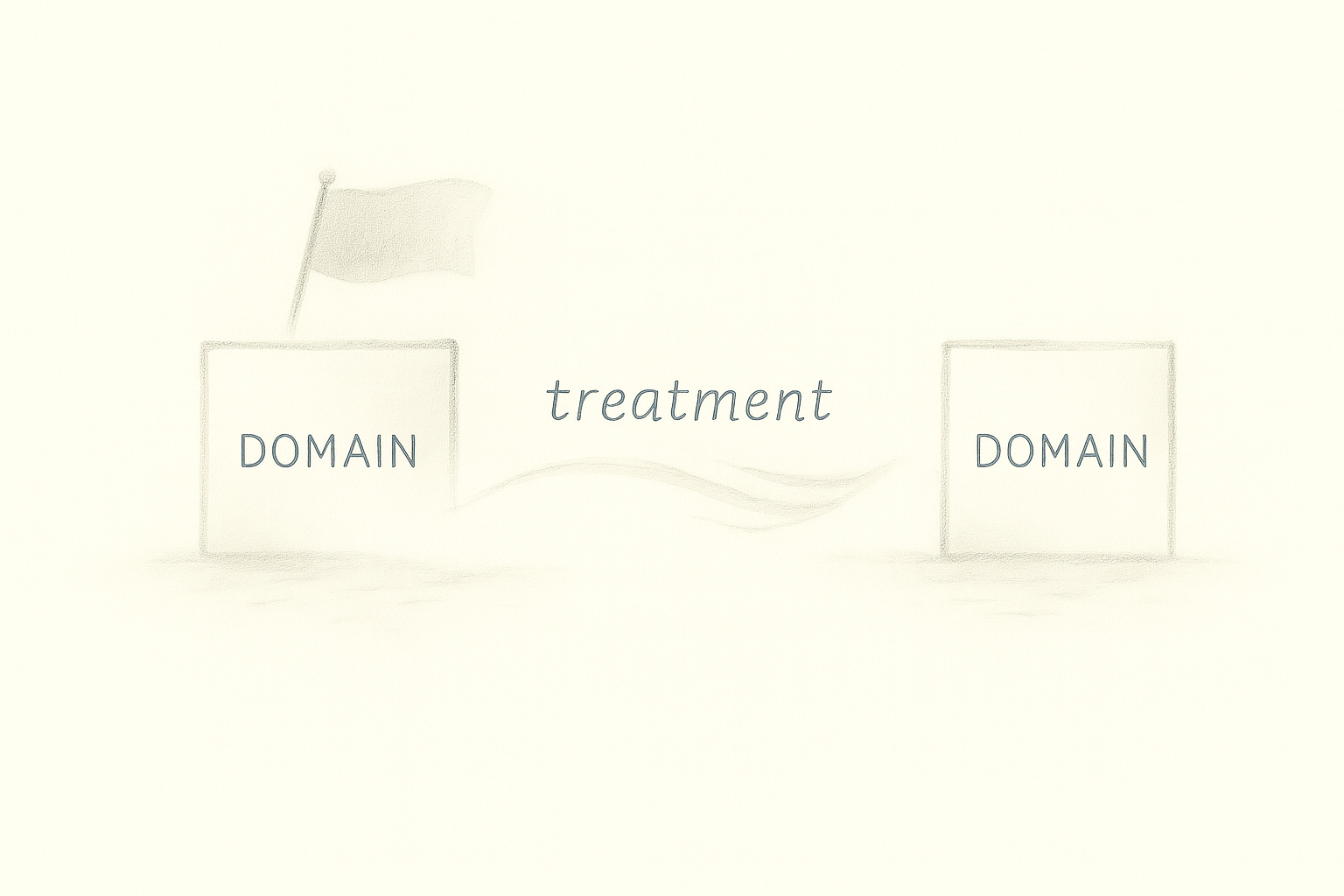
They wanted the treatment, the actual action they were supposed to take.
Then came the Air moment.
In a short meeting, we asked the simplest question:
“What do you want the receiving domain to do?”
Everything cleared instantly.
Stop passing flags.
Pass treatment intentions.
“Apply fee reduction”
“Route to manual review”
“Bypass interest calculation”
Now the domains were independent.
Cognitive load dropped.
No more reverse engineering intent.
No more opaque coupling.
The system exhaled.
When Air flows, ambiguity disappears.
Flags communicate data.
Air communicates purpose.
🌬️ The Architecture of Air
Architectures become fragile when meaning stops moving.
Misalignment is humidity.
Opaque agreements create fog.
Flags without purpose cause suffocation.
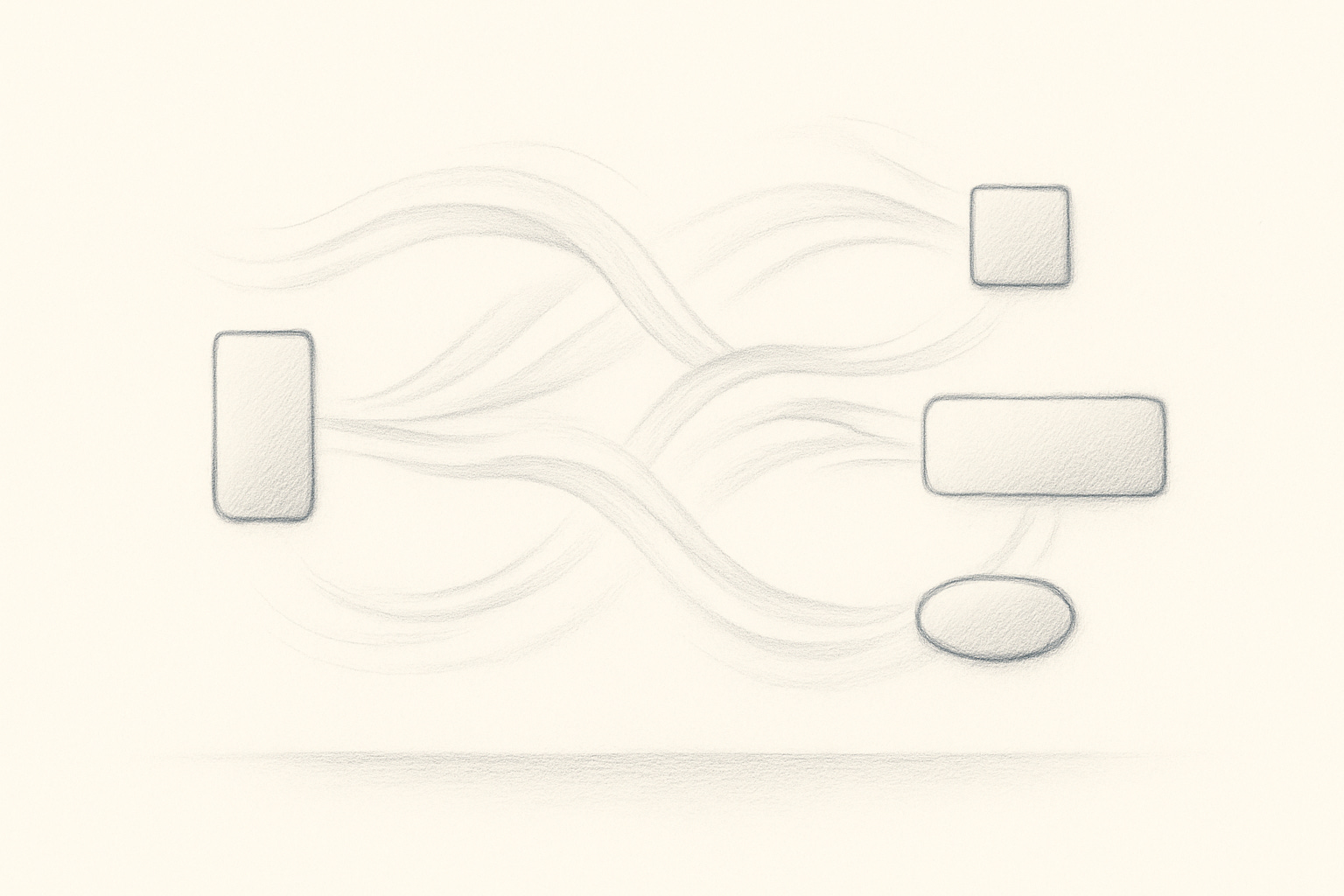
Air teaches us that the most important part of a system is the context that moves through it.
Air carries:
intent
clarity
behaviour
purpose
direction
understanding
When Air stops moving, systems grow heavy.
When Air moves freely, everything becomes lighter.
Air makes architecture breathable.
🌬️ Reflection
Where in your architecture are teams passing data when they should be passing meaning?
Which domain is suffocating under assumptions?
Where does the system need Air, not implementation?
🌬️Sutra: Clarity Is Breath
Air gives life to architecture.
Where context moves freely, systems stay light.
Where meaning stops flowing, complexity begins.
Subscribe to Systems & Sutras
If this resonates, subscribe for weekly essays blending engineering clarity, architecture philosophy, and timeless principles for thinking and leadership.
Subscribe to Systems and Sutras