

Legacy systems are not old.
They are inherited.
The difference is who decided what to do with them.
The Word Legacy Is Doing Two Different Jobs.
In technology conversations the word legacy means old systems. Outdated platforms. The estate that should have been replaced and was not. The condition is treated as a property of the technology itself.
In leadership conversations the same word means something different. The legacy of a tenure. What endures after the leader is no longer in the seat. The contribution that lasts.
Most discussions treat these as separate meanings. They are not separate. They are connected.
The legacy systems in your estate are the leadership legacy of every leader who held the seat before you. Your leadership legacy will include the systems you allow to compound or actively evolve. The two meanings are the same compound seen from different positions in time.
Why Systems Become Legacy.
A system does not become legacy because it is old. A system becomes legacy because nobody evolved it.
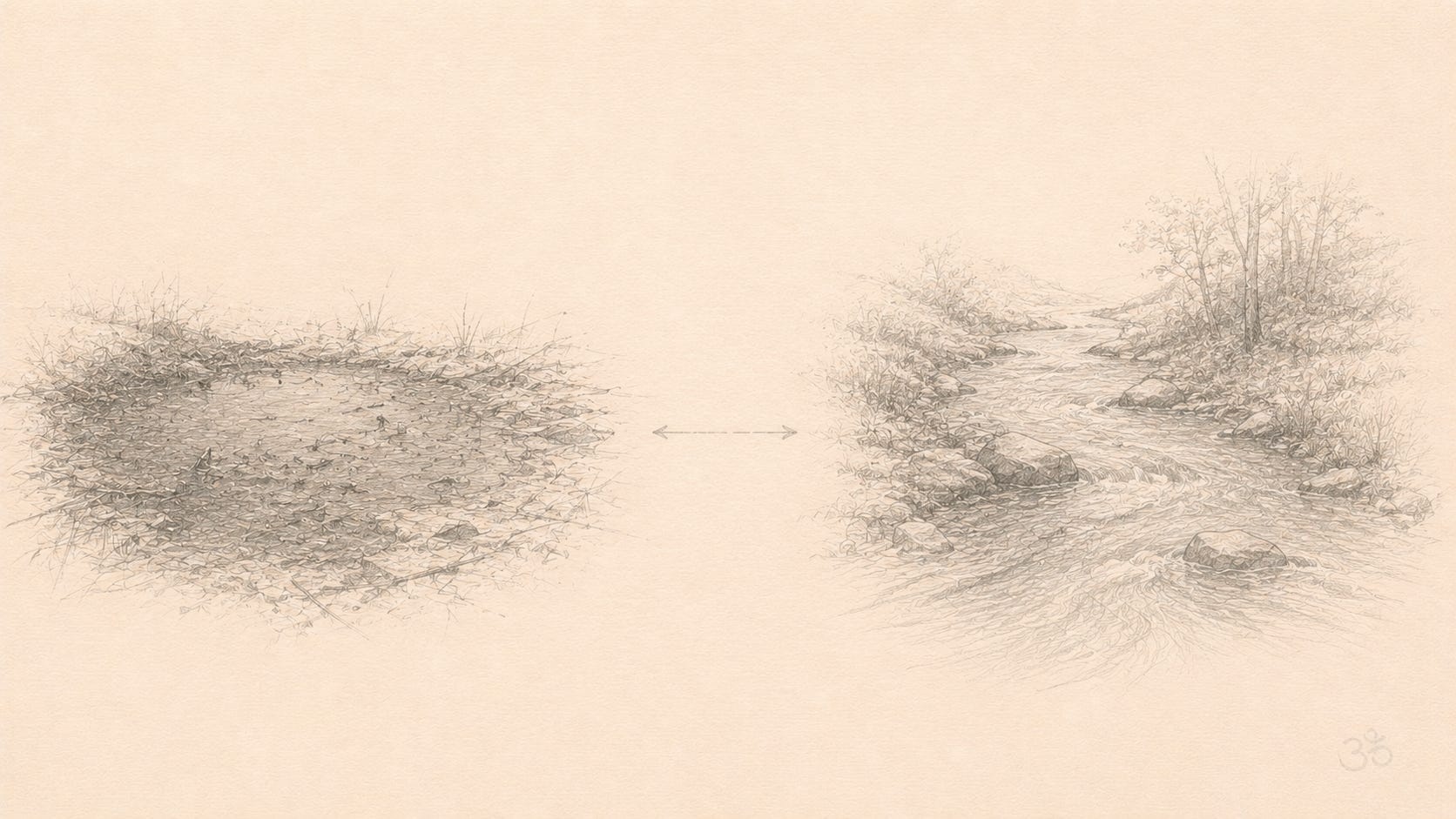
Stranded water becomes spoiled. The water itself does not change at first. It just sits. Sediment accumulates. Conditions shift. The water that was fresh on the day it was stored becomes something different through the simple act of not moving. The longer it sits, the more spoiled it becomes. Eventually it cannot be used at all, even though nothing was ever added to it. The spoilage is the consequence of stillness.
Flowing water stays fresh. It is constantly moving. It carries away what would otherwise accumulate. It encounters new conditions and adapts. The water that flows through a system today is not the same water that flowed yesterday, but the system itself remains alive. It is not the water that is fresh. It is the flow.
The same principle applies to technology systems. A system that is evolved continuously, refactored against changing requirements, and tended for boundary clarity stays current even when it is technically old. A platform built three years ago and frozen since release is more legacy than a platform built fifteen years ago that has been continuously evolved.
The legacy condition is not a property of how old the system is. It is a property of whether the work has been flowing or not.
But systems do not exist alone. They sit in a landscape. The landscape is the work of multiple hands across multiple seasons. Each gardener tends what they planted and what was inherited from previous gardeners. A garden left untended for one season can be recovered with concentrated effort. A garden left untended for several seasons becomes a different kind of work. Conditions compound. Soil degrades. What was planted intentionally is crowded out by what arrived without invitation. The next gardener inherits not a garden but the consequence of multiple seasons of neglect.
Each individual gardener’s choice to defer the tending was defensible against the constraints of their season. The cumulative effect across multiple seasons is the unmaintained garden the next gardener now has to work with.
This is what happens to technology landscapes across multiple tenures. Each previous leader made an individually defensible decision to defer evolution. The cumulative effect produced the legacy estate the current leader has inherited.
The Shapes of Legacy.
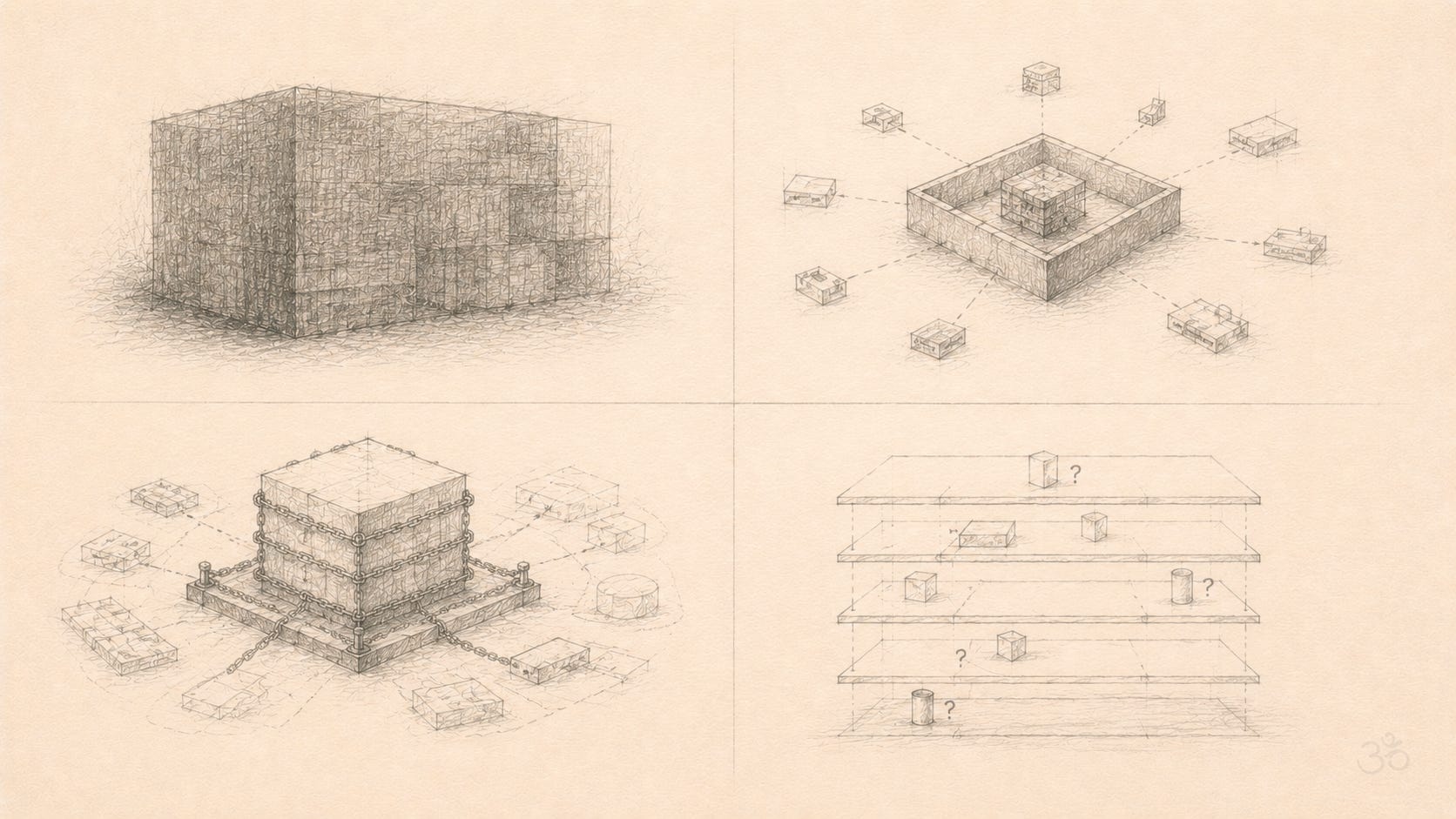
Legacy is not one phenomenon. It has multiple shapes. Each shape is the visible architectural consequence of a different leadership decision pattern. Across the programmes I have been directly involved in, four shapes appear repeatedly.
The bloated platform.
A platform that has accumulated scope beyond its intended boundary. Multiple domains in one place. Repeated attempts to simplify that have not produced simplification. Stakeholders treating colocation as an advantage because change is easier when everything is in one place.
The fallacy. Confusing a true monolith with a modular design with a distributed system. People believe the platform is simple because it is colocated. They mistake colocation for coherence. Most have stopped knowing what the platform does. They think they know what it does. The understanding has been lost while the colocation has remained.
The legacy condition. A platform whose physical and logical architectures have diverged so far that nobody can confidently predict the impact of any non-trivial change. Integration capabilities never evolved because every change was routed through the existing pattern. The decoupling that would have allowed evolution was never funded because colocation made everything appear easier than it was.
The over-guarded platform.
A platform whose boundary has been protected so aggressively that core functions which belong inside it have been pushed to the periphery. Risk framing used to prevent integration. New capabilities forced to live elsewhere because the platform that should hold them refuses to absorb them.
The pattern. Risk-aversion at the platform level treated as virtue rather than as a trade-off. The leader of the platform protecting their own scope at the cost of the wider landscape.
The legacy condition. A patchwork of capabilities scattered across systems that should not have been carrying them. The complexity is in the topology of where capabilities ended up. Nobody designed this topology. It emerged from the cumulative pattern of refusal.
The vendor guarded platform.
A platform managed by a vendor whose contractual or operational arrangement has prevented core change. Peripheral changes have happened. Core changes have not. The platform is now unable to scale to higher order customer journeys.
The pattern. Sourcing arrangements treated as commercial decisions rather than as architectural decisions. Each tenure inherited the vendor relationship and made the rational decision to operate within its constraints rather than renegotiate it.
The legacy condition. A platform whose limitations are now structural to the organisation’s commercial trajectory. The capability gaps are not technical. They are contractual. But the contract is itself a leadership artefact that previous tenures chose not to revisit.
The capability in the wrong layer.
Capabilities built in the periphery of the architecture rather than in the right layer. Whole systems living in the ETL layer. Other systems living in the channel layer. Each placement justified at the time by available skill, time pressure, or political reality.
The pattern. Architectural layer violations treated as expedient compromises in the moment. Each individual decision was defensible. The cumulative effect is an architecture where critical business logic and data live in layers that were never designed to hold them.
The legacy condition. A landscape where the documented architecture and the actual architecture have diverged. The complexity of change compounds because every change has to navigate both architectures simultaneously.
These four shapes do not exhaust the legacy condition. They appear repeatedly enough to constitute a working typology. A senior estate is likely operating with at least two of them simultaneously. Many carry all four.
The Mapping.
The first work of any senior tenure with significant inherited landscape is the mapping. Not what the systems do. What they are carrying.
The mapping begins with conversations with the people who have been tending the systems for years. Reading the texture of how the work is being done. The diagrams tell you what the systems are supposed to do. The conversations tell you what they actually carry.
The four shapes named above rarely appear in isolation. The bloated platform sits next to the over-guarded one. The vendor frozen platform sits next to the capability in the wrong layer. Each shape requires its own form of remediation. Each shape carries its own history of leadership decisions.
The mapping is not optional. The leader who skips it makes decisions about an inheritance they do not yet understand. Most of those decisions have to be remade later, after the inheritance has been understood.
The Cumulative Legacy.
Each previous deferral became the inheritance of the next tenure. The current leader inherits both the systems and the pattern of decisions that produced them. Their own pressures continue the pattern unless they actively refuse it.
This is the harder work. Refusing the pattern is not a technical decision. It is a decision to refuse the structural pressure that produced the legacy in the first place. The pressure is real. The recognition system is calibrated to reward continuing the pattern. The deferral that produced the legacy is rewarded again in the current moment as the same defensible response to the same kind of pressure.
Breaking the pattern means making a different decision under the same pressure that produced the legacy.
The Dual Defensive Pattern.
Refusing the structural pressure is the harder work. Most leaders do not get there because the moment of naming the legacy produces a response that closes off the conversation before the refusal can happen.
Two patterns of response tend to follow. Both are forms of defensive avoidance. Both compound the legacy further.
The first pattern. Explicit defensive avoidance. When the legacy is surfaced to senior stakeholders, the response is often defensive. They are unwilling to take the risk of making a long-term decision because the long-term decision exposes them to consequences during their tenure that the short-term approach does not. They fall into the short-term approach. The legacy compounds.
This pattern is rational from the individual stakeholder position. The recognition system rewards short-term outcomes. Long-term decisions produce visible cost during the tenure that funds them. The natural response to having the legacy condition surfaced is defensive avoidance because acknowledging the condition implies an obligation to act on it.
The second pattern is more subtle. Structural defensive avoidance. The leadership team has reached agreement on the direction of travel. Simplification is endorsed. Everyone agrees on where the estate needs to go.
But each individual change decision tends to gravitate back toward the existing estate. The short-term focus of each delivery cycle produces decisions that extend the legacy rather than move toward the future. Each decision is individually defensible. The cumulative effect across hundreds of small decisions is minimal investment in the agreed strategic direction.
This is the pattern that catches even careful leaders. There is no single moment of refusal. There is only the cumulative consequence of many small defaults to the existing estate. The strategic agreement is correct. The execution is gravity-bound to the legacy.
What Breaks the Patterns.
The mapping work shifts the conversation. Investment that had been framed as cost becomes investment that is buying down inherited liability. The conversation shifts from features delivered to legacy compound bought down. This shift is necessary. The shift alone does not break the patterns. It only makes them visible.
What breaks the patterns is harder. Each individual investment decision has to actively resist the gravity of the existing estate. Each one has to be evaluated not only against immediate delivery pressure but against the cumulative direction it produces over time. The leader has to absorb the personal risk of holding the line on the long-term direction across hundreds of small decisions where the short-term option would be defensible.
The bet the leader makes against the recognition system is the bet that determines what kind of legacy they leave.
The Two Legacies Are the Same Legacy.
The legacy systems in your estate are the leadership legacy of every leader who held the seat before you.
This is not metaphor. It is description. The bloated platform is the legacy of leaders who allowed scope to accumulate without funding decoupling. The over-guarded platform is the legacy of leaders who allowed boundary protection to take precedence over capability placement. The vendor frozen platform is the legacy of leaders who treated the contract as fixed rather than as evolvable. The capability in the wrong layer is the legacy of leaders who allowed expedient compromises to compound.
None of these were single decisions. All were patterns of decision across years and tenures. The leadership legacy is what those patterns produced.
Your leadership legacy will include the systems you allow to compound or the systems you actively evolve. The legacy you leave is being created now, in the daily decisions about whether each individual change extends the existing estate or moves toward the future architecture.
The Leader’s Choice.
Every leader inheriting a landscape with significant legacy faces the same choice.
Defer further. Manage around the legacy. Hand it forward to the next leader with the same defensible justifications previous leaders gave themselves. Continue the pattern.
Or invest in evolution that may not produce visible value during the current tenure but reduces the legacy compound for whoever inherits next. Break the pattern.
The recognition system rewards the first option. The landscape requires the second.
The leader who chooses the second is paying capital the recognition system will not see. They are doing it knowing the political pressure that produced the legacy will continue to operate against them throughout their tenure. They are doing it knowing the visible cost of their decision will land during their tenure while the visible benefit will land during their successor’s. They are doing it knowing the credit for the future they are building may go to the leader who inherits the seat after them.
This is the harder thing. It is also the truer measure of the seat. The leader who breaks the pattern is doing the work that does not look like leadership while it is being done. It looks like cost without offsetting benefit. It looks like investment without justification under the current quarter’s metrics.
Most leaders do not do this work. The recognition system is calibrated against it. The few leaders who do it are choosing what kind of legacy they leave behind through what they actively tend now. They are doing it for the greater good, knowing that doing the right thing rarely produces the right reward in the moment it is being done.
The pattern continues until someone breaks it. The seat decides whether the pattern continues here or stops here.

The Sutra
The legacy you inherit and the legacy you leave are the same compound seen from different positions in time.
If you found this useful, the likelihood is someone you know is asking the same question. Pass it on.